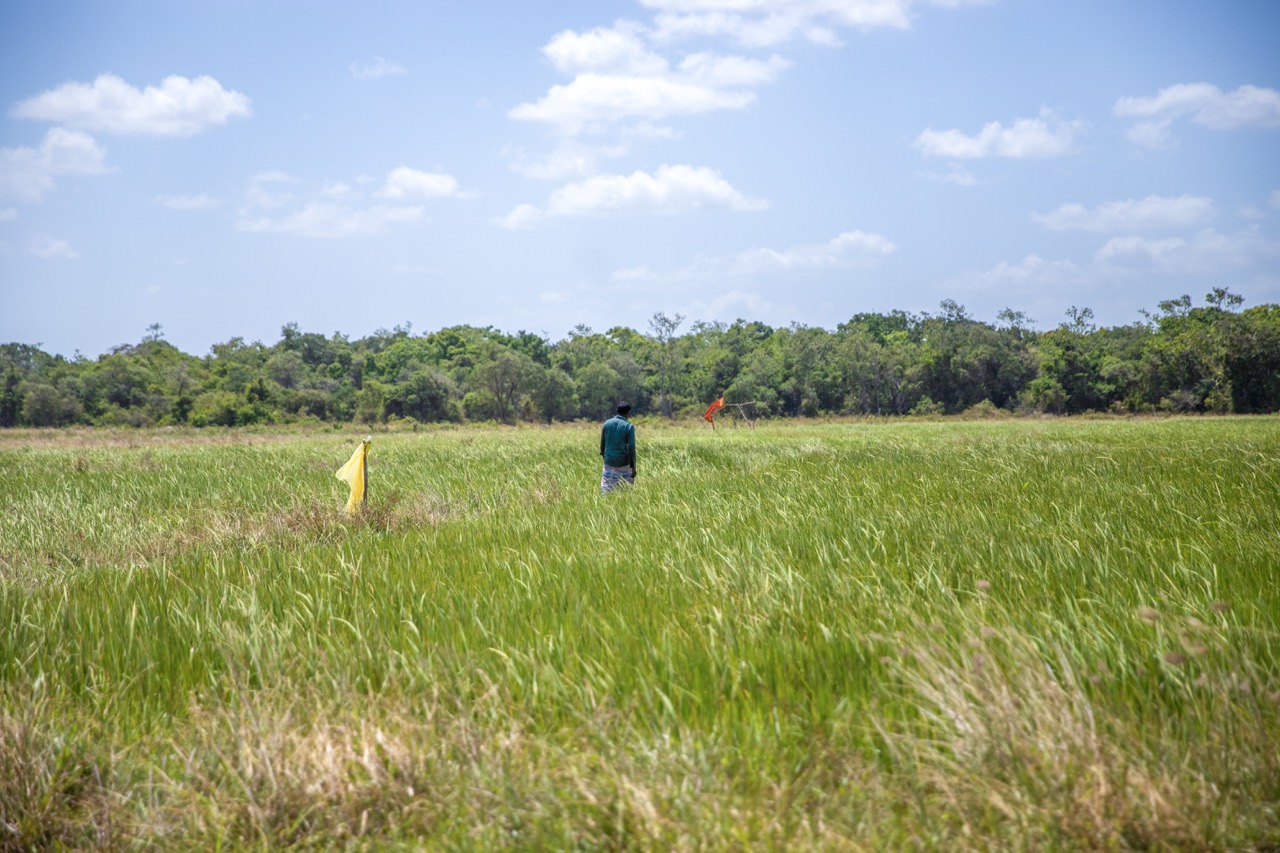
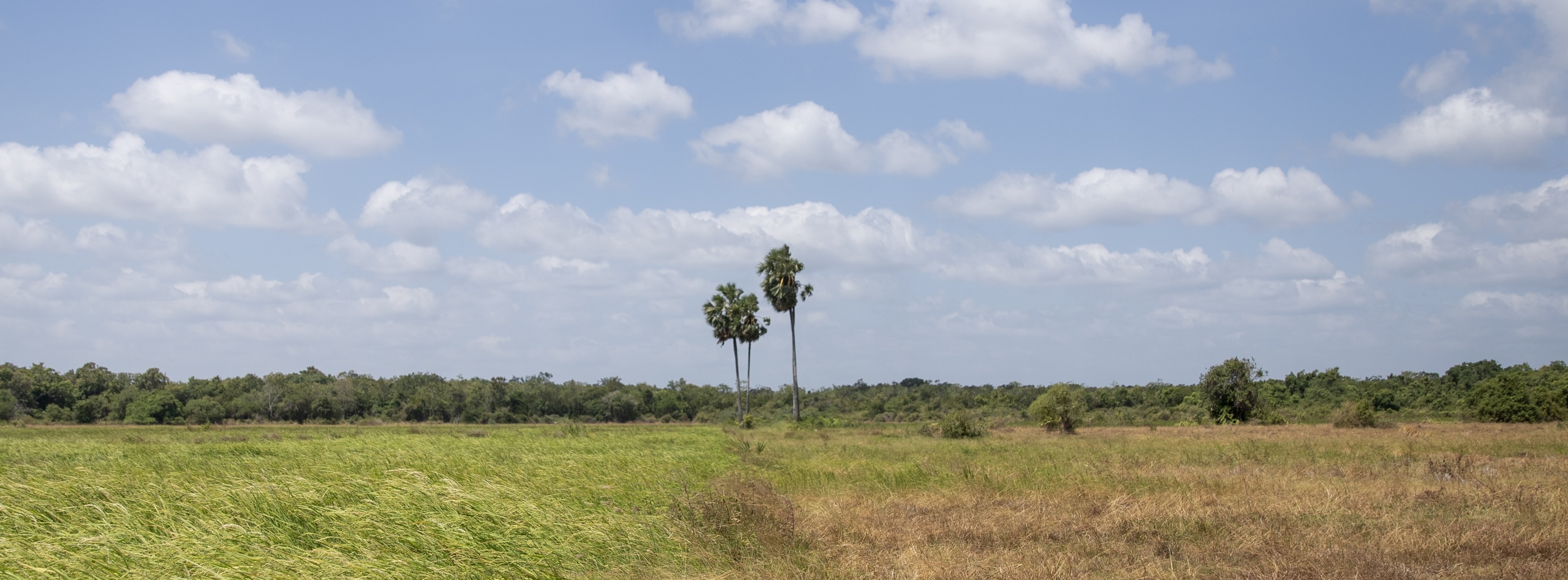
After the war, Sivalingam Mohanathas returned to his land in Nedunkerny in 2010. The 50 acre paddy field that his father had last cultivated in 1972, before they were displaced, had turned into a full jungle. From 2017 onwards, Mohanathas spent the days he could spare clearing the jungle. As the father of five sons, the fear for his family’s future gave him the determination to reclaim the land. “The place I cleared was not forest; it was our paddy field,” he says. In 2019, while working to restore the field, forest department officials arrested him on charges of illegal deforestation.
Though Mohanathas was later released on bail, the battle was far from over. The forest department immediately filed a case against him in court, denying him access to his own fields. Determined to protect his livelihood, he took his fight to the judicial system.
After a grueling three-year legal struggle, the court ruled in his favor, declaring him innocent. In July 2025, after receiving a copy of the court verdict, he went to inspect his field in September of the same year. To his shock, he found that it had already been occupied by Sinhalese settlers – the entire area had been brought under the Kivul Oya project. That a man could be acquitted of clearing his own land and yet return to find it already occupied and folded into a state irrigation scheme is where this story begins.
The “Kivul Oya” Project
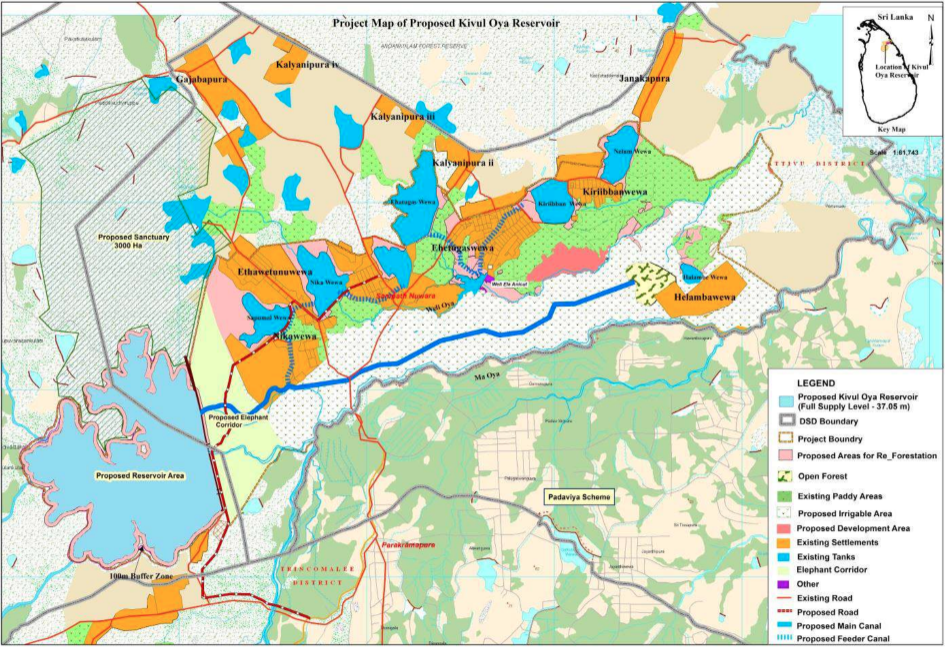
The Kivul Oya project is a settlement scheme launched in 2011, two years after the end of the civil war. The project aims to build a dam across the Kivul Oya river in Sri Lanka’s North-East, particularly in the Vavuniya and Mullaitivu districts, to improve irrigation for agriculture. Work was temporarily halted due to the 2023 economic crisis. However, the government has allocated Rs 23,456 million for the project, which is scheduled for implementation between 2026 and 2031. The scale of that commitment is itself revealing. The cabinet first approved the project in September 2011 at an estimated Rs. 4,170 million. The allocation approved on 19 January 2026 is more than five times larger – for a scheme whose economic rationale, as discussed below, remains deeply contested.
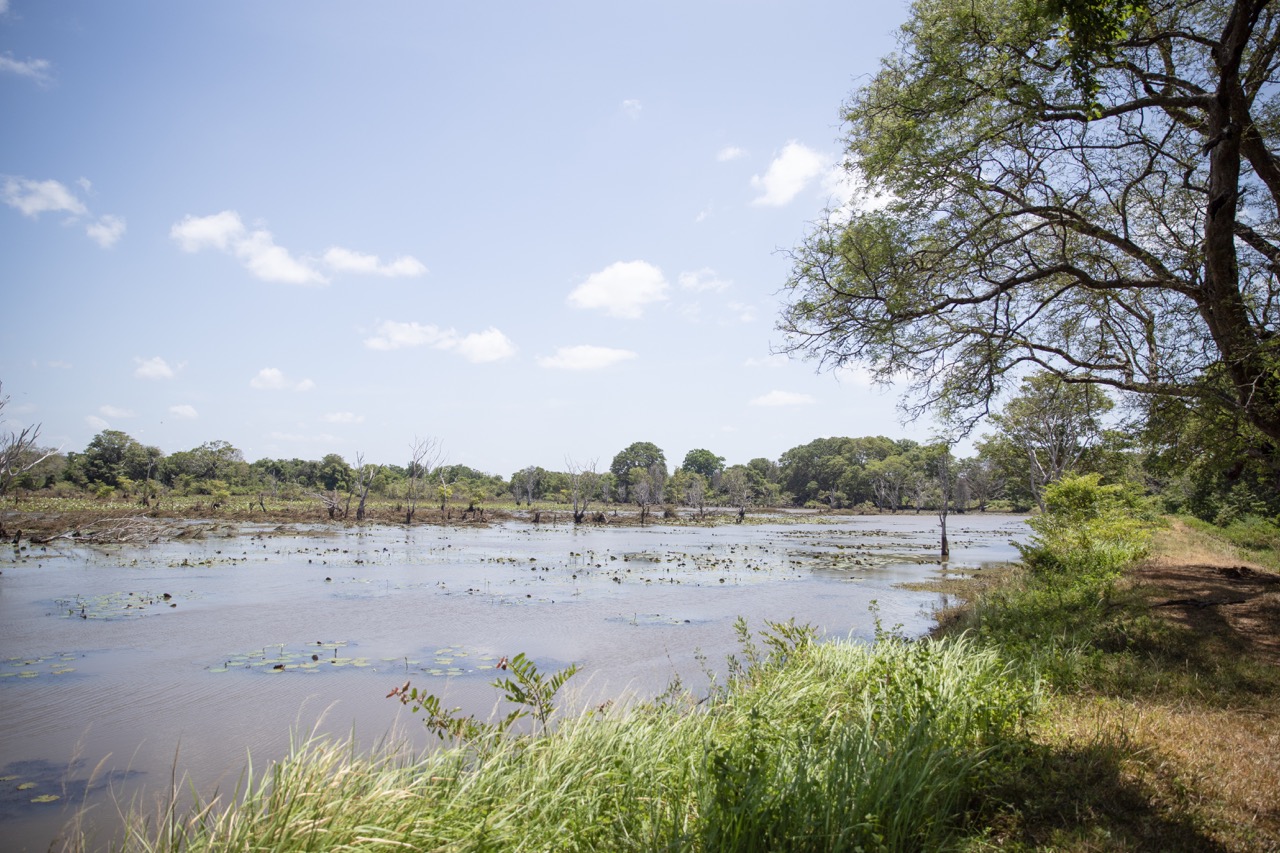
The government's case is straightforward: once built, the scheme will expand irrigation, lift agricultural production, and spur rural development. But that framing is precisely what a 2026 report by People for Equality and Relief in Lanka (PEARL) calls into question, arguing that state-driven settlement and irrigation schemes in the North-East operate under the cover of development language while functioning in practice to dispossess Tamil communities of their traditional lands — and that this pattern makes them not just politically corrosive, but economically counter-productive.The evidence on the ground bears this out. A total of 16 tanks, including the one in Mohanathas’ Thirivaichchakulam, as well as Tamil ancestral villages such as Kaattupoovarasankulam, Kaanchiramoaddai and Maruthodai, face the risk of being turned into reservoirs. This will directly affect the agriculture-based livelihoods of local people and their access to water resources. Further plans have been made to settle around 7,000 Sinhalese people, while no equivalent land allocation has been made for Tamil communities. None of this is accidental – or new.
Though recently restarted, the Kivul Oya project is only the latest expression of a Sinhala-Buddhist state long practised in using development to colonise land and alter ethnic demographics. What follows is less a single controversy than a pattern repeated so many times it has become policy: irrigation, settlement and militarisation, each reinforcing the last. To understand why a dam proposed in a remote corner of Mullaitivu should provoke such alarm, one has to read it against that longer history – and against the documented record of how earlier schemes in this very landscape actually worked.
Development as Colonisation
After Sri Lanka gained independence, particularly from the late 1940s, irrigation and agricultural development projects began in the North-East. The Gal Oya Irrigation and Settlement Scheme launched in 1948 brought approximately 95,000 acres under irrigation and created new settlements. This was followed by the Allai and Kantalai Irrigation Schemes in the Trincomalee district.
From the 1950s onwards, settlement schemes expanded in the border areas of the claimed Tamil homeland. The Padaviya Settlement Scheme, centred on a reservoir, created new irrigated lands and agricultural settlements. Later, the Mahaweli Development Project launched in the 1970s became Sri Lanka's largest irrigation scheme, converting thousands of acres in Systems B, C and L into farmland. System B was built around the Maduru Oya reservoir in the Batticaloa district in the east; System C opened up land in the North Central Province around Dambulla and Polonnaruwa; and System L, the last and most contested of the three, was declared in 1988 in the Manal Aru area of Mullaitivu – the Tamil homeland – and brought Sinhalese settlers into territory from which Tamil villagers had been driven out. Yet none of these was, in the end, only a development project. Each arrived clothed in the language of national food self-sufficiency, poverty alleviation and land for the landless – the standard idiom of what was then celebrated internationally as “river valley development.” Yet as Urs Geiser and Benedikt Korf show in their study of Manal Aru/Weli Oya, this developmental vocabulary consistently accompanied a quieter territorial logic, in which the clearing of jungle and the distribution of irrigated plots became a means of advancing a Sinhala-Buddhist settlement frontier into the dry-zone North-East. Development, in other words, did not merely coexist with demographic change; it was the instrument through which that change was accomplished while remaining publicly deniable.
Nowhere is that clearer than in the scheme that is Kivul Oya's direct ancestor. The people displaced by these schemes remember what was lost. The Weli Oya Settlement Scheme, introduced in the 1980s, created new settlements in the Mullaitivu and Trincomalee border areas. The name itself tells the story in miniature. Before 1984 “Weli Oya” was virtually unknown. The area was Manal Aru, “sand river” in Tamil. What the state imposed was not even a new name but a translation – manal (sand) rendered as the Sinhala weli, aru (river) as oya – so that the Tamil landscape was, quite literally, overwritten in Sinhala while the place itself stayed put. Geiser and Korf document how, following the expulsion of Tamil residents from areas such as the Kent and Dollar farms in 1984, the state settled Sinhalese families across the cleared land and, in 1988, formally folded the area into the Mahaweli scheme as ‘System L.’ The settlement had a barely concealed purpose. Herman Gunaratne, one of the scheme's own architects, described in his 1988 memoir For a Sovereign State how it was designed to drive a demographic wedge between the Northern and Eastern provinces, severing the territorial contiguity on which any future claim to a Tamil homeland would rest. The irrigation rationale, meanwhile, was in engineering terms largely fictional. As Thiruni Kelegama and Benedikt Korf write, by the Mahaweli authorities’ own later admission, water could never realistically be brought to System L at the elevations required. The settlers paid the price. Promised irrigated paddy land the system could not deliver, many arrived and soon left, while others remained in acute poverty under close army observation. The scheme nonetheless succeeded completely. It is this template – a hydrological promise that need not be kept, attached to a settlement project delivered in full – that the Kivul Oya dam now extends.
What that template cost is written in the memory of those it displaced. In the 1970s, the entire northern part of Vavuniya was a prosperous agricultural region, as 80-year-old social activist Vairamuthu Poobalasingam recalls. He says the villages surrounding Mohanathas’s Thirivaichchakulam paddy fields were all lush and green.
“When I travelled through that area in my youth, I saw hundreds of acres of lush mango, coconut and papaya orchards.”
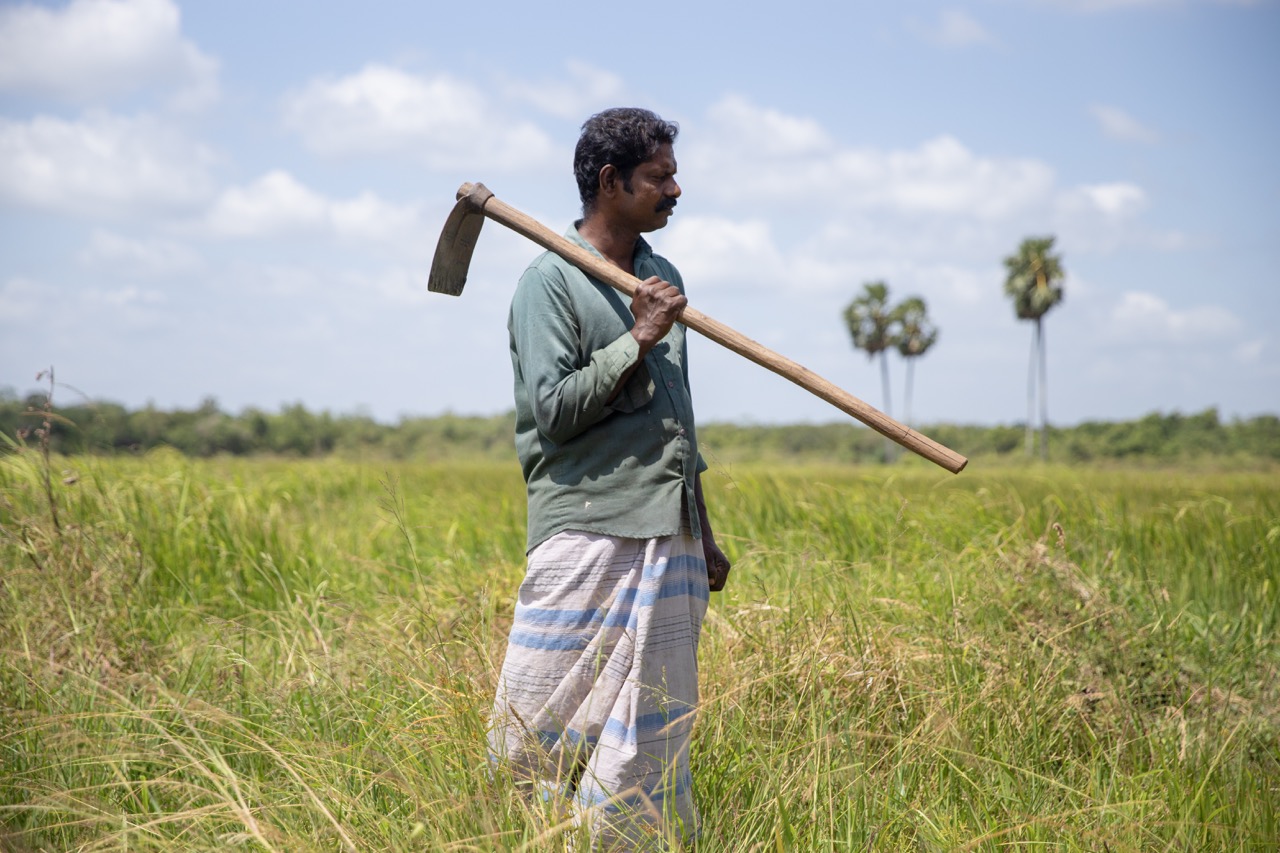
A wide variety of vegetables such as aubergine, lady’s fingers and carrots were cultivated there. Mango, jackfruit, papaya and other fruit trees also thrived. Paddy fields with irrigation facilities, he points out, were the primary livelihood of the area.
That world began to close in the 1980s. In December 1983, armed groups attacked Tamil civilians in the prosperous farming village of Othiyamalai in the Nedunkerny area, killing many and causing some to go missing, Poobalasingam recounts. Many families were forced to flee their homes, and the prolonged armed conflict that followed kept them from returning to their villages for a long time. The cost of that logic falls hardest on those trying to come home. After the war ended, when the people gradually returned to their villages and tried to rebuild their livelihoods, they faced new challenges in reclaiming their land. Many of those who returned years later do not possess documents to prove land ownership. Poobalasingam explains that the long war and repeated displacements caused title deeds to be lost or destroyed. “It is unrealistic to expect documents from us when we lost even our children in the civil war. Even without documents, it is our ancestral land,” he emphasises. The demand for paperwork is rarely neutral. In a region where war and repeated displacement destroyed or scattered land records, the insistence on formal title functions as a sorting mechanism – one that converts the very fact of displacement into grounds for dispossession, while encroachment backed by the state is quietly regularised.
Impact on Livelihoods
Thishan Mathushana, the joint coordinator of the non-profit Environment and Community Development Empowerment Organisation, which works on land issues particularly in the Northern and Eastern provinces and focuses on Tamil people’s rights, points out that it is an undeniable truth that Tamil people have been losing their ancestral lands for various reasons after the war. He says land seizures have increased in the Northern Province, including Mullaitivu and Vavuniya, through Sinhalese settlements, and as a result many Tamil families have been forced to move away from their traditional lands.
He stresses that land rights are one of the fundamental rights that should be available to every human being. However, he says there are many difficulties for people in these areas to prove that right legally. “Due to the war that lasted more than thirty years and multiple displacements, the land documents of very many people have been lost or destroyed. In some places the documents are still in the names of ancestors, and because they have not been legally transferred to the present generation, people are unable to prove their rights,” Mathushana said.
“Everyone knows that people’s properties were destroyed due to multiple displacements during the war. Yet the situation exists where lands are denied to people on the grounds that they lack proper documents. As a result, people are losing their ancestral lands,” he says.
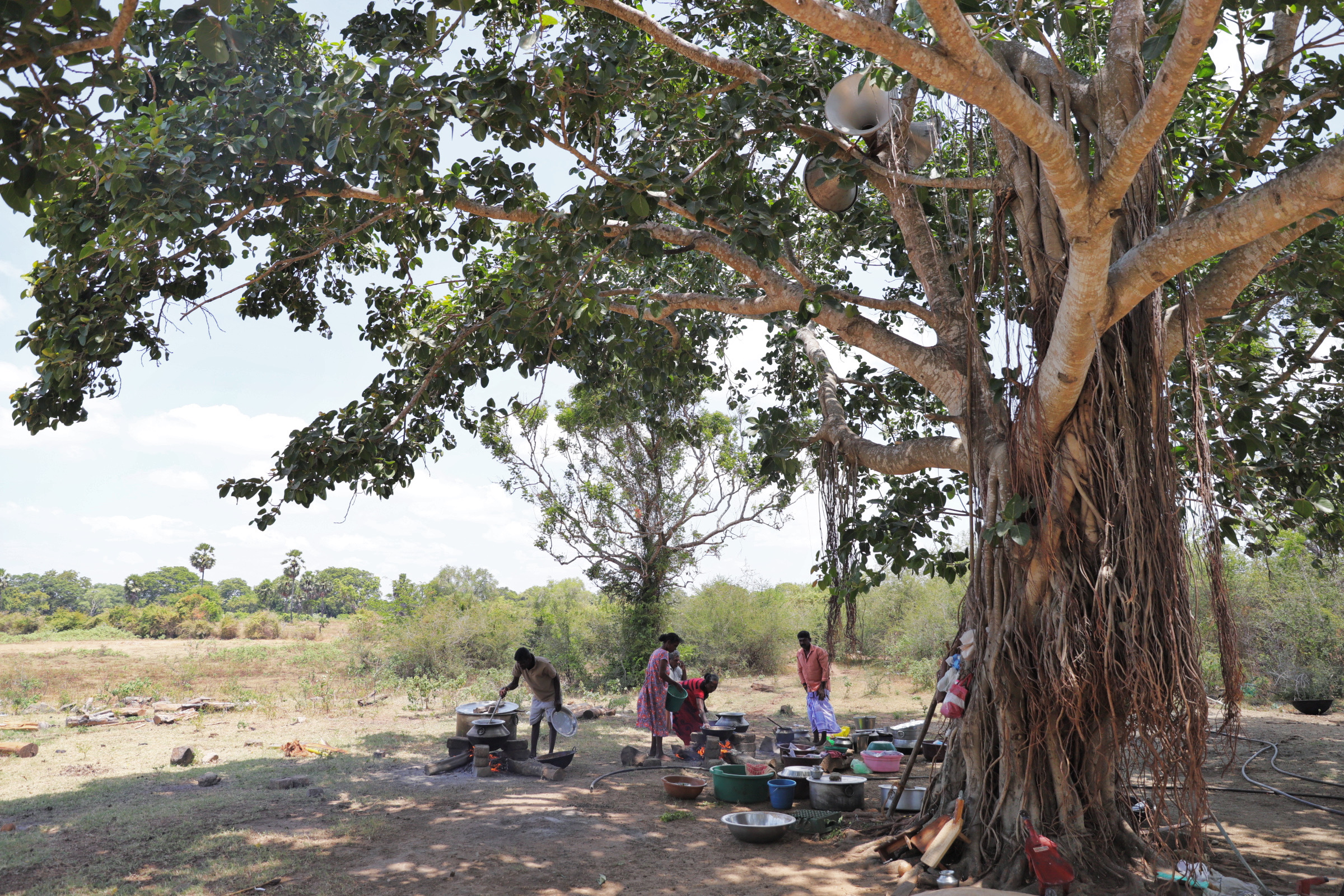
At the same time, he explains that a large number of displaced people have still not been able to return to their own lands. Government tourism development projects, Forest Department restrictions, national security reasons and the lack of land documents are the main reasons for lands being taken over by the state. The lands seized in this way are being converted into Sinhalese settlement schemes. He points out that some lands previously taken from people by the Forest Department have now been included in new projects such as the Kivul Oya development scheme. He says those lands could have been returned to the people earlier itself. “In my view, the government is continuing to seize people’s ancestral lands in various ways,” Mathushana says.
The instruments differ – forest protection, archaeological designation, irrigation, security – but they converge on a single outcome, and their very variety is part of what makes the process so difficult to name and resist. Each acquisition can be defended in its own technical terms, even as the cumulative effect is the steady transfer of land out of Tamil hands. Rachel Seoighe describes this as a post-war “authorship of space,” in which the state writes its presence onto the northeastern landscape through the renaming of places, the building of Buddhist stupas in Hindu and Christian areas, and the “rediscovery” – by archaeological teams that arrived in force after 2009 – of ancient sites whose designation then justifies fresh claims to the land beneath them. These are not abstractions to the people who have lived them. Sureskumar Ketheeswaran, a 28-year-old who returned to his own land after the war, was arrested while preparing to cultivate his paddy field again. Forest Department officials arrested him along with Mohanathas, charging them with illegal deforestation. Later released on bail, he too was declared not guilty in the court case filed against him along with Mohanathas.
But the legal acquittal did not return his land to him.
Sureskumar says he was shocked when he inspected his paddy field after the case ended. In the very area where he had been accused of clearing, hundreds of acres of forest had been removed and new fields had been created. He accuses that those lands were given to Sinhalese settlers.
“They are telling us not to even come into our own land. The people who have presently settled there are threatening us with death if we go there,” he stresses. Sureskumar now depends on wage labour to support his family’s livelihood.
For Mohanathas, the impact is similar: to feed his seven-member family, he has been forced to lease 15 acres of paddy land in the neighbouring Mannar district. Away throughout the cultivation season, he leaves his wife and children alone, facing difficulties and mental stress.
Theirs is not an unusual predicament. Where land is the foundation of stability and livelihood, to be without it is to start from nothing – and these people must now rent the very ground they once owned. That reversal, more than any statistic, measures what has been lost: incomes, as well as the social fabric and the continuity of a way of life passed down through generations. And what they have already suffered, others are now bracing to face – for along the path of the Kivul Oya project, the same loss is only beginning.
Traditional Occupations
Sivaguru Sivasenthilnathan, 53, president of the Vedivaiththakallu Farmers’ Organisation, warned that if the Kivul Oya project continues as planned, hundreds of acres of paddy fields under his organisation could be affected, impacting the livelihoods of many families who depend solely on agriculture in the area. He also said that if the surrounding forests are destroyed due to the project, the threat from wild animals will increase, making agricultural activities even more difficult.
His fear is borne out by the project’s own documentation. The Centre for Environmental Justice, reviewing the Environmental Impact Assessment, found that the scheme would clear some 2,500 hectares of what wildlife and forest officers themselves describe as the best forest in the area, stripping elephants of around 1,500 hectares of habitat. The proposed remedy – kilometres of electric fencing – relies on a technique that Sri Lanka has spent more than sixty years failing to make work. The damage does not stop at the forest’s edge. Since most people in these areas depend only on agriculture, land loss pushes them into debt and forces them to change occupations. Mathushana says that before such projects are implemented, sufficient consultation or prior notice is not given to the people of the area.
“Such development projects cause massive damage to people’s livelihoods,” Mathushana says. He notes that since the end of the war in 2009, “land release” has been a major demand in most of the protests taking place in Tamil areas. Yet alternative livelihood schemes for those losing land have still not been implemented in a constructive manner, and there are no clear or uniform solutions on compensation. He says that even when the government provides alternative land, what is given back rarely matches the size or value of what was taken.
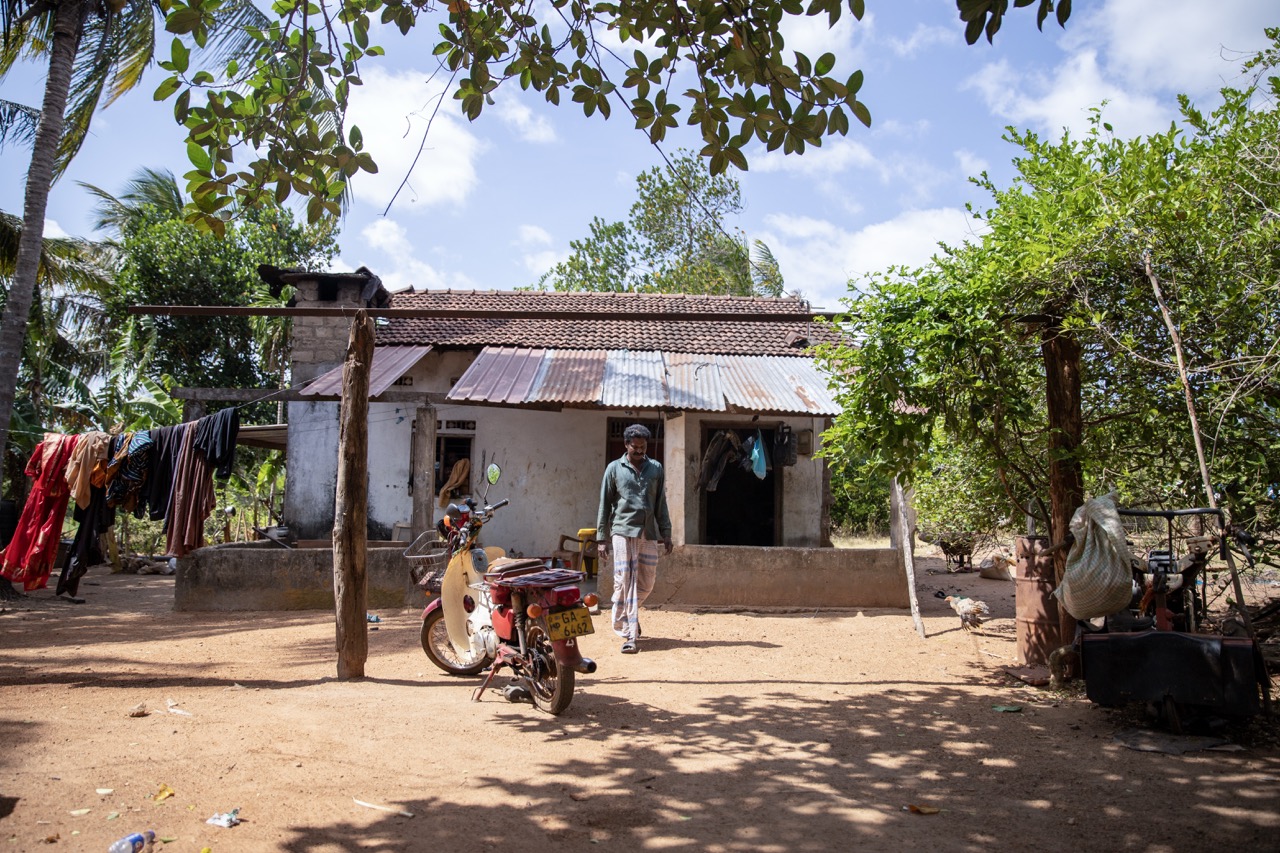
He also points out that women-headed families are disproportionately affected by these land issues. When they lose land, their livelihoods are greatly affected, and their children face difficulties in food security and education.
It is the next generation Mathushana fears for most. The land rights that should pass to them are being lost, he warns, and a landless social order is taking shape in their place — one in which, with no land to inherit and no work to stay for, the young drift to the cities or abroad. 24-year old Sabesan Mohanathas is one of those deciding whether to stay. He now farms alongside his father, but the agricultural life passed down through his family – their main livelihood – is being made impossible by the long-running disputes over land.
“These land disputes have directly affected our generation as well. Many youths of our age are already migrating abroad, especially to Middle Eastern countries, in search of employment. When the government pushes forward such projects, we are forced to leave our ancestral occupations and lands,” he says.
The loss of land rights is no longer merely an economic matter but a lever of power, identity and population control.
For Sabesan, this loss also reaches into the future. If the ancestral lands connected to their family for generations are not available to them, they will not be able to continue the agricultural life based on those lands. And in the absence of one’s own land, buying new land is also impossible. As a result, the younger generation faces the danger that the traditional agricultural occupation passed down through generations cannot be continued – a prospect that, he says, throws their social and economic future into doubt.
This is where the economic becomes political. The loss of land rights is no longer merely an economic matter but a lever of power, identity and population control. As Tamil communities lose their traditional land, they lose with it both an economic foundation and a measure of political weight, while the absence of work drives the young away – thinning the very population the settlements are designed to dilute. Their departure is not incidental to this process but woven into it: a population that cannot inherit land cannot remain, and a frontier is consolidated as much by who quietly leaves as by who is brought in to replace them.
Development as Settlement
Parliamentarian for the Vanni district, Thurairasa Ravikaran, states that the Kivul Oya development project is being viewed as an indirect act of genocide. He says the project is taking forward the activity of seizing lands from Tamil people and distributing them to Sinhalese people. After the Mahaweli development project previously implemented in the North-East, Tamil people’s lands were gradually seized and given to Sinhalese settlers. He says such actions are being carried out with the aim of getting rid of Tamil people from their ancestral lands and weakening their existence and ethnic continuity.
Ravikaran explains what the project will submerge: a large number of Tamil-owned paddy fields, roads and settlements. The consultation meetings, he says, told their own story – no organisations representing Tamil people were invited, and only Sinhalese people were asked to be present.
“The government's attempt to push forward these projects without including or accommodating any Tamils altogether is considered to be ethnic cleansing or genocide,” he says.
The precedent he reads it against is regional: the changes made in the past in Trincomalee and Amparai districts, he argues, were aimed at disrupting the demographic continuity of Tamil communities in Mullaitivu and Vavuniya.
That demographic logic is already inscribed on the land itself. The water bodies under Sivasenthilnathan's farmers’ organisation – Eechankulam, Vedivaiththakallu, Kallatrukulam, and Thirivaichchakulam – face the risk of being fully or partially damaged, and Thirivaichchakulam has now been renamed “Andarwewa” in Sinhala. The renaming is not a footnote but a method – the same move that once turned Manal Aru into Weli Oya. To rechristen a tank in Sinhala is to write the settlement onto the map itself, making the landscape testify to a Sinhala-Buddhist presence that the displacement of its Tamil cultivators is meant to establish.
There is also fear among local people regarding the settlement activities associated with the project. “When a situation arises where Sinhalese people are settled in these areas, it creates security and livelihood fears for us living in neighbouring villages,” Sivasenthilnathan says. He added: “Their lands are to be accessed only through our paddy fields. Even when we went to the site with a Member of Parliament, we were threatened that we would be hacked to death. We see this as a direct threat to our lives.”
It is for these reasons that people are coming together in large numbers and expressing their opposition through protests, he notes. “Our expectation is that the government should let the Tamil people live. But if such actions continue, as representatives of the people, a condition forces us to join with the people and oppose this project,” he says.
He stresses that people who have already lost everything due to the civil war are now facing huge difficulties even for their livelihood, and submerging approximately 910 acres of land will completely destroy the livelihoods of the people who lived on those lands
During a discussion on the Kivul Oya reservoir project held with Tamil parliamentarians and led by the minister in charge K.D. Lal Kantha, the government stated that the project has progressed with cabinet approval and the necessary financial allocations. Because public opposition has arisen, discussions were held taking those concerns into consideration. The minister assured that the project will not be forcibly imposed on the people, that any issues that arise will be examined and resolved, that there is no plan to change the population ratio through settlement changes, and that the benefits of the project will go to the people currently living there. He also stated that Rs 3 billion has been allocated for small and medium irrigation projects to improve the agricultural and irrigation systems of the Northern Province, and that this funding will be used to rehabilitate irrigation systems damaged by the war. The government emphasised that all matters related to the project will be carried out only on the basis of the recommendations of the District Coordinating Committee, and that action will be taken taking into account both the benefits and the impacts of the project.
These assurances are worth taking seriously, but also worth situating. They reproduce, almost word for word, the humanitarian framing that has accompanied such projects for seventy years. The Mahaweli Consultancy Bureau’s own 2020 justification for the Kivul Oya dam appeals to families who “have been suffering” and “lost their livelihood several times”, and casts the scheme as redress rather than expansion. That the reassurance of “no plan to change the population ratio” should be attached to a project explicitly slated to settle 7,000 newcomers in districts where, under earlier Mahaweli schemes, no Tamil families were resettled, suggests how far the public account and the documented plan have drifted apart. Tellingly, the project’s own Environmental Impact Assessment lists only Sinhalese families as resident in the area to be developed. The promise and the practice belong to different registers. And it is the gap between them, sustained over decades, that the residents of Nedunkerny have learned to read. Ravikaran reads it the same way. The promise to include Tamils, he says, misses the point: there is no need to bring Tamil settlers into these areas at all, because Tamils already live there, as they always have – it is the projects themselves that displace them. “The real settlers in these areas are not Tamils, but Sinhalese who are the new settlers,” he says.
“We are taking all possible preventive measures. If we can obtain a favourable solution for our people, that would be excellent,” Ravikaran says. As a parliamentarian, he has submitted several reports to the government regarding the impacts of this project. Although the government has said that they will take them into consideration, he notes that it is not clear how feasible this would be translated into practice.
For Mohanathas, the struggle is more personal. The land he has spent years trying to reclaim is not merely a piece of ground but his family’s future and the inheritance of his five children, and he is prepared to return to the courts if he must. “I want that land. If I somehow get it back, the future of my five children will be bright,” he says.
And yet the field Mohanathas means to reclaim sits in the path of something larger and more durable than any single government. The Kivul Oya scheme was conceived under one administration, suspended under another, and revived under a third – the National People's Power government elected in 2024 on a promise of rupture with the old order, and which won support in the Tamil north and east. That a government elected to break with the past has taken up the same scheme, in the same districts, on the same terms, says something about how deeply the drive to settle and secure the north is lodged in the machinery of the state – deeper than any one party or programme. It is into that machinery, and not merely a development project, that a man clearing his father's paddy field has found himself, decades later, still standing in its path.