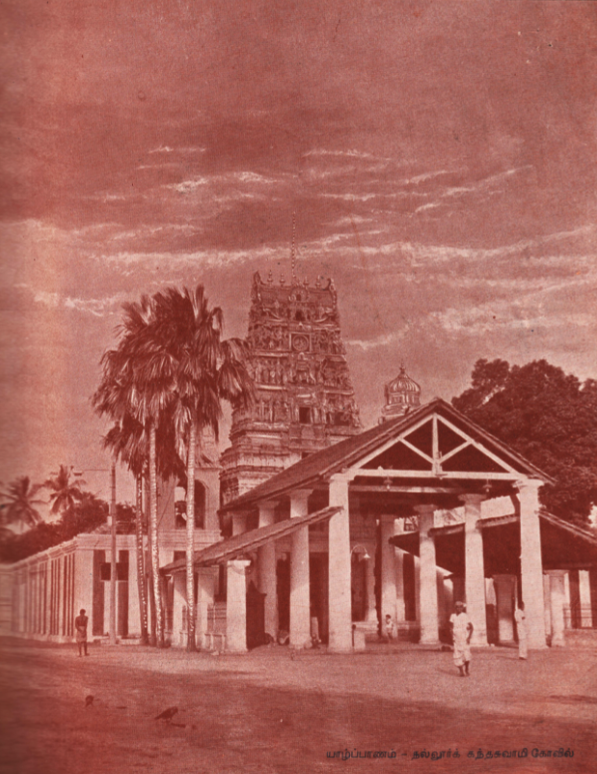
On July 9, 1956, as the first light of dawn spread across Jaffna, a small group of worshippers stood before the gates of Vaitheeswaran Kovil in Vannarpannai. They sang thevaram hymns and recited thirumurais, their voices wavering with emotion, tears running freely down their faces. Those who had gathered to accompany and welcome them found themselves weeping too; barriers built not of stone but of deeply entrenched social convention had kept these devotees outside the temple walls for generations. On this historic morning seventy years ago, those barriers gave way.
Barely an hour earlier, a similar scene had unfolded at Nallur Kandaswamy Kovil, where Panchamar devotees had entered the temple alongside social workers and board members of the Temple Entry Movement. Now, at the 6:30 a.m. poosai in Vaitheeswaran Kovil, they received tharisanam once again. Before long, similar emotional scenes were repeated across Eelam. What began with three temples gradually widened as more temple administrations, some willingly, others under considerable public pressure opened their doors to devotees who had long been denied the right to worship. These moments of devotion were the culmination of a much longer struggle.
For generations, Panchamar communities had been denied not only the right to enter Saiva temples but also any meaningful role in their construction, administration, or ritual life. Their exclusion was woven into the fabric of Vellalar-dominated Tamil society, sustained by inhuman Vedic doctrines of ritual purity, untouchability, and hereditary hierarchy that transformed caste and untouchability into both a social and sacred order. The scenes witnessed that July morning were therefore not spontaneous acts of transgression and reconciliation but the hard-won result of decades of organising by oppressed-caste communities, progressive youth, trade unionists, and social reformers determined to confront caste power at one of its most enduring sites of authority. Temple entry, however, was only one front in a much broader struggle against Vellalar-Brahmin supremacy and caste oppression.
Reform, Resistance, and Radicalisation
Throughout the nineteenth and twentieth centuries, Panchamar communities across Eelam lived under a regime of severe social exclusion that reached into almost every aspect of daily life. Making up roughly 18% of the Eelam Tamil population at the time, they were barred from temples, tea shops, wells, schools, and public transport; forbidden from wearing clothing considered "respectable" by dominant castes; and subjected to practices of untouchability and distance “pollution” that dictated where they could walk, work, worship, draw water, sit and even look at. Caste was not simply a matter of social status. It ordered space, movement, labour, housing, and dignity, defining the boundaries of everyday life as much as those of the temple itself.
Resistance to this discriminatory social order long predated the temple-entry campaigns of the 1950s and 1960s. It emerged from generations of conflict over caste, status, and access to public life. From the early nineteenth century onwards, British colonial rule gradually transformed the social order of Eelam. This included the weakening of older forms of caste-based slavery and servitude that had entrenched Vellalar supremacy while oppressing Panchamar communities. Yet the outside attempt of dismantling these violent structures did not eradicate caste, untouchability or Vellalar rule itself. Hierarchies of ritual “purity,” social distance, and exclusion persisted, repeatedly producing old and new tensions as well as violent confrontations. Long before race riots were to mark Tamil history, it was intra-Tamil caste riots that shaped Tamil communal and national history. By the 1920s, these caste tensions had developed into organised campaigns for equality and against discrimination. Panchamar communities challenged exclusion through a succession of struggles, while a generation of Tamil reformers began to question the moral legitimacy of untouchability itself. Among the most influential forces was the Jaffna Youth Congress, founded in 1924 by Handy Perinbanayagam, which pioneered the island-wide demand for Ceylon's full independence, drawing inspiration from the Indian independence movement and Gandhian principles of social reform, non-violent resistance, and national regeneration on the other side of the oceanic shoreline. They argued that a society seeking political freedom could not continue to deny dignity and equality to its own people, and that the struggle against colonial domination had to be accompanied by a transformation of social relations at home.
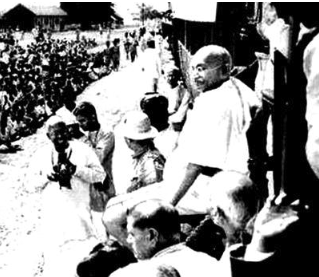
The anti-caste politics that emerged across Eelam during the early twentieth century drew from several currents of reformist thought. Gandhi’s visit to Jaffna in 1927 gave fresh impetus to a growing movement that questioned the moral legitimacy of untouchability. During his tour of the peninsula, Gandhi met members of the Jaffna Youth Congress and spoke forcefully against caste exclusion, urging caste Hindus to view the abolition of untouchability not as an act of charity but as a moral and spiritual obligation. His message found a receptive audience among sections of the Tamil elite, including the reformist educator Handy Perinbanayagam, whose willingness to challenge social orthodoxy would leave a lasting imprint on the Youth Congress. Under his leadership, the Congress became one of the principal vehicles through which these ideas were expressed. They supported campaigns for equal seating and dining among schoolchildren, access to public facilities, and the dismantling of practices that marked Panchamar communities as “socially inferior”. Yet the limitations of moral reform soon became apparent. Caste was not simply a question of prejudice or individual behaviour; it was a system of power embedded in institutions, customs, and political representation.
By the 1930s, sections of the movement began moving beyond appeals for reform towards more explicit forms of political organisation. In 1930, Youth Congress members helped establish the Depressed Tamils Service League, which sought to secure political representation and civil rights for oppressed-caste communities. That same year, they invited the Tamil social reformer and Dravidian movement leader E. V. Ramasamy, popularly known as Thanthai Periyar, to Jaffna. His visit introduced the radical ideas of the Self-Respect Movement to a wider audience in the peninsula, challenging not only untouchability but the deeper structures of caste and patriarchal hierarchy itself. Through public meetings and receptions organised by the Youth Congress, Periyar’s message of social emancipation found resonance among those who increasingly viewed caste as a political system requiring collective struggle rather than simply a social evil requiring reform. The evolution from Gandhian reformism to more radical anti-caste politics reflected a broader transformation in the movement itself. Early campaigns appealed to conscience, morality, and religious responsibility; later organisations demanded rights, representation, and structural change. Yet across these different approaches ran a common conviction: political freedom would remain incomplete so long as caste determined who could enter a temple, sit in a classroom, drink from a public well, or claim equal dignity within Tamil society. The struggle for equality in Eelam was indeed a sustained political challenge to a social order determined to preserve inherited privilege and humiliation.
Panchamar Political Assertion
The limitations of reform movements led largely by caste elites soon became apparent. While organisations such as the Jaffna Youth Congress challenged untouchability and promoted social reform, many Panchamar activists increasingly argued that the struggle for equality could not depend upon the goodwill of dominant castes. If caste oppression was a system of power, then its dismantling required political organisation by those who experienced that oppression directly. It was within this context that the Minority Tamil Mahasabha emerged as a significant force in the struggle for social equality. Founded in 1943 by the Conference of Oppressed Tamils, the organisation represented a new phase in anti-caste mobilisation: one in which Panchamar communities sought not merely reform from above but political recognition and collective representation. The Mahasabha challenged the structures that had relegated oppressed-caste Tamils to the margins of public life and demanded the abolition of untouchability, equal access to education, and the removal of barriers that restricted professional advancement. The organisation also brought the caste question directly into the political arena of late colonial Ceylon.
During the deliberations of the Soulbury Commission in 1944-45, which examined constitutional reforms before independence, the Minority Tamil Mahasabha submitted its own memorandum rather than relying on the dominant Vellalar Tamil political organisations of the period. This was a significant act of political assertion, directly challenging the authority and monopoly over Tamil representation claimed by the All Ceylon Tamil Congress. While bodies such as the Tamil Congress primarily represented Vellalar Tamil grievances as a minoritised community within a Sinhala-majority state, the Mahasabha insisted that the Tamil community itself was internally divided by structures of inequality that could not be ignored and be trusted to be resolved by the Tamil Congress. The Mahasabha’s intervention revealed a fundamental contradiction within Tamil politics of the period. Dominant-caste Tamil leaders spoke of collective rights and minority protection, yet many Panchamar communities continued to experience exclusion within Tamil society itself. For the Mahasabha, liberation could not be reduced to ethnic/racial representation alone; it had to include social equality, access to institutions, and the recognition of oppressed caste communities as full participants in political life. Panchamars future was to be in the hands of Panchamars themselves, not Vellalar oppressors or allies.
Although the organisation struggled to secure separate political concessions within a constitutional framework largely shaped by broader ethnic/racial negotiations, its significance lay elsewhere. It established a language of rights and representation that would shape later anti-caste campaigns. It reframed the caste question as one of citizenship rather than charity. Access to temples, education, and public space was not presented as a favour to be granted by dominant castes but as a fundamental right.
The Margins of Tamil National Memory
The significance of these struggles becomes clearer when set against the wider history of Tamil resistance in Eelam. In Tamil political memory, 1956 is remembered as the year of the Sinhala Only Act, the satyagraha campaigns that followed, and the anti-Tamil pogrom that marked one of the first major eruptions of post-independence ethnic/racial violence. Those events have rightly become central to the story of Tamil nationalism. Yet 1956 also witnessed another historic struggle that unfolded in parallel: the entry of Panchamar devotees into some of Jaffna's most revered temples after generations of exclusion. That this history remains largely outside the dominant national narrative is itself significant. It reflects more than an omission of memory; it reveals the boundaries of the nation as it has been imagined. Resistance to Sinhala majoritarianism was elevated as the defining national struggle, while resistance to caste was treated as a social question; important to some, but not constitutive of the larger national cause. The result is a history that remembers one struggle for equality while rendering another comparatively peripheral or invisible.
The consequences of this omission extend beyond historical memory. By locating the origins of Tamil political resistance almost exclusively in the community's confrontation with the Sinhala-majoritarian state, dominant narratives obscure an earlier genealogy of mobilisation. Long before demands for federalism or national self-determination came to define Eelam Tamil politics, Panchamar communities were organising against caste oppression and untouchability within Tamil society itself. In many respects, the anti-caste movement constituted the first sustained tradition of mass social protest among Eelam Tamils. The caste conflicts of the nineteenth century, including violent confrontations over temples, public spaces, and civic rights, exposed a contradiction that would continue to shape Tamil politics for decades: the struggle for collective liberation coexisted with the persistence of hierarchy within the community itself.
By the early twentieth century, these recurring conflicts had evolved into a sustained movement for social and political equality. The movements for equal seating and dining among schoolchildren in the 1920s, the Temple Entry Movement of the 1950s and 1960s, and the Tea Shop Entry Movement of 1958 were not isolated disputes over custom or religious practice. They were contests over citizenship itself: who could occupy public space, participate in civic life, and claim full belonging within the Tamil community. Those questions could not remain confined to the temple courtyard or the tea shop. They inevitably entered the sphere of Tamil politics, where they became entwined with an emerging debate about nationalism itself. If Tamils demanded equality from the postcolonial state, what obligations did they owe to those denied equality within Tamil society?
Anti-Caste Struggle and the Making of Tamil Nationalism
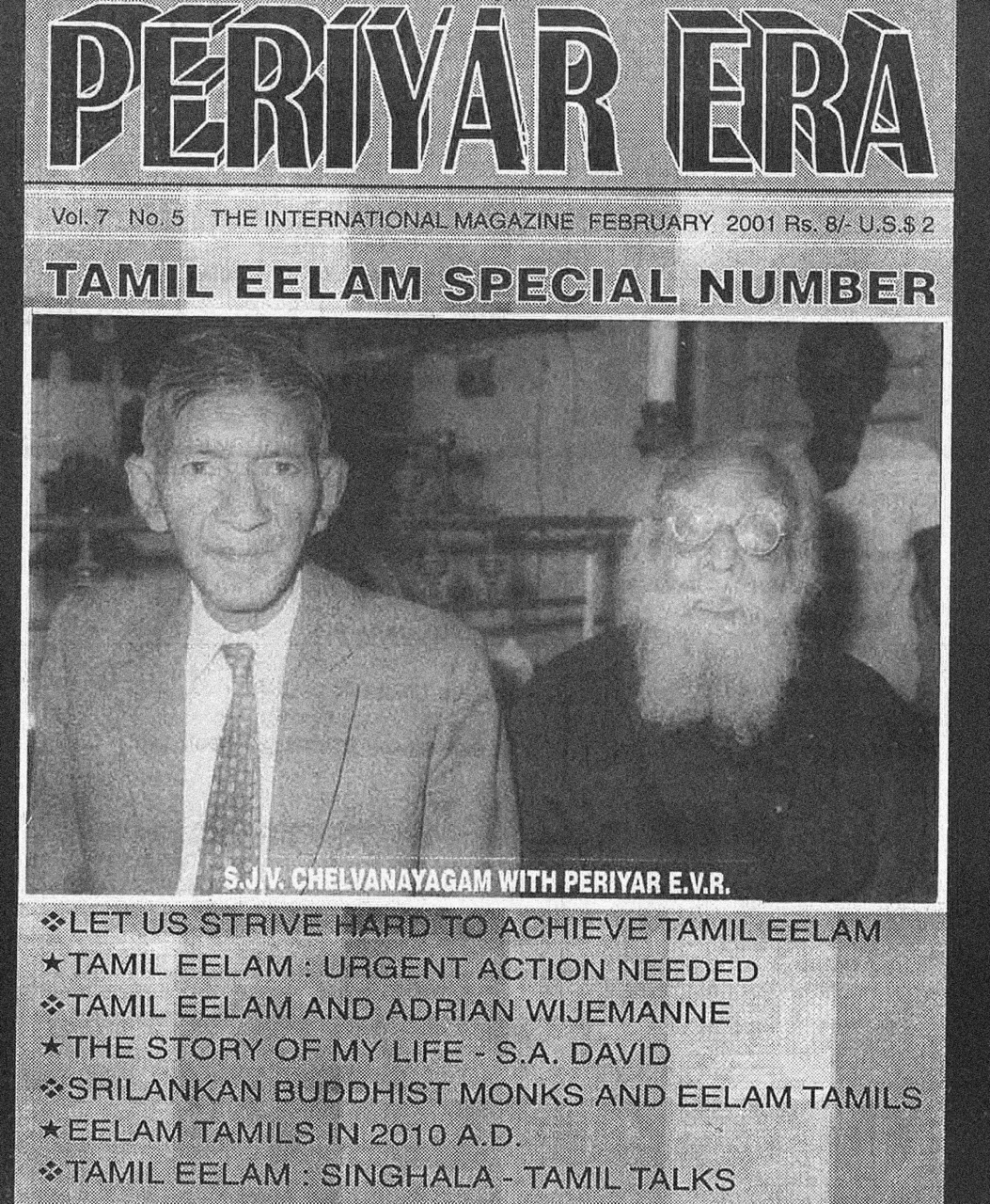
The Federal Party, founded in 1949 under the leadership of S. J. V. Chelvanayakam, emerged from a split within the All Ceylon Tamil Congress over the question of minority rights and representation. The immediate catalyst was the party’s opposition to the Ceylon Citizenship Act of 1948, which disenfranchised a large proportion of Malayaga Tamil plantation workers, most of whom were of oppressed caste origin. While the Tamil Congress leadership supported the legislation, the Federal Party rejected it as a betrayal of minority rights and a failure of Tamil political responsibility towards the most vulnerable communities. This divide also reflected deeper tensions within Eelam Tamil society. The dominant political leadership of the Tamil Congress was closely associated with Vellalar interests, and its approach often prioritised the concerns of a privileged and landholding Tamil elite. The Federal Party, while itself emerging from this same political world, increasingly argued that Tamil unity could not be built upon existing social hierarchies. For its leadership, the struggle for Tamil rights required confronting not only discrimination from the Sinhala-dominated state but also inequalities within Tamil society itself. In both its social vision and political strategy, the party drew upon the legacy of the anti-caste movement. Many of the methods that came to define Federal Party agitation, including satyagraha, boycotts, strikes, and other forms of organised non-violent civil resistance, had already been developed and tested in campaigns against caste discrimination, where they had proved effective in challenging entrenched social authority and mobilising collective action.
At its fifth annual convention in Trincomalee in 1955, months before the detrimental 1956 Sinhala Only Act was passed, the Federal Party affirmed the abolition of caste discrimination as a fundamental concern for Tamil society. In doing so, it brought into the political mainstream demands that had previously been championed by the Minority Tamil Mahasabha, elevating them to the centre of Tamil nationalist politics for the first time. The party recognised that the success of the Tamil national struggle depended not merely upon securing political protections for Tamils as a minoritised community, but also upon addressing the internal divisions that weakened the moral and social foundation of collective freedom. Those internal fractures, they believed, were not merely a moral and cultural failing but a political vulnerability, one that could be exploited by a Sinhala-dominated state seeking to weaken Tamil solidarity. This commitment was reflected in its support for temple-entry campaigns, where the party warned that continued exclusion of oppressed-caste worshippers would lead to an escalation of satyagraha and, if necessary, a general strike. Through this stance, the Federal Party articulated a vision of Tamil liberation in which the struggle against caste oppression was inseparable from the broader pursuit of national rights and political equality.
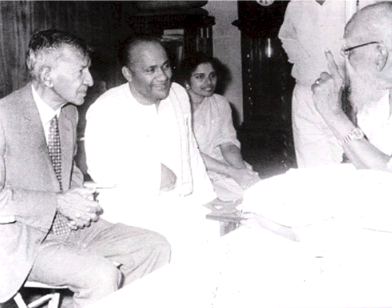
Across Tamil-language newspapers and periodicals of the period, these questions became the subject of intense debate. The caste question was no longer confined to village disputes or temple boundaries; it had entered the bourgeoise arena of Tamil intellectual thought. Writers, activists, and political commentators argued over whether a community seeking justice from an external majoritarian state could ignore forms of exclusion reproduced within its own social structures. In publications such as Suthanthiran, writers argued that those accustomed to social privilege could only fully comprehend the experience of marginalisation when they themselves encountered exclusion by a larger political order. In hindsight, these arguments proved strikingly prescient, anticipating how the experience of ethnic/racial subordination would come to reshape Tamil political consciousness in the decades that followed. At the same time, sections of the Vellalar elite responded by insisting that the struggle for Tamil minority rights and national recognition should be treated as separate from questions of caste reform, reflecting the tensions over what constituted the primary political concern of the Tamil community.
These debates unfolded in the shadow of the ethnic/racial crisis of 1956. In the months preceding the first major anti-Tamil riots since independence from British rule, which followed the passage of the Sinhala Only Act, Tamil writers were already engaged in a profound debate over the meaning of equality, belonging, and collective rights within their own society. The arguments advanced by anti-caste thinkers were not a rejection of Tamil identity or opposition to the emerging struggle against Sinhala majoritarianism; rather, they questioned whether a politics of liberation could remain incomplete if it did not also confront the hierarchies embedded within Tamil society itself. The debates revealed a deeper tension at the heart of Tamil nationalism: whether the pursuit of collective rights would simply seek protection for an ethnic/racial community against external domination, or whether it would also demand a transformation of the social relations that governed life within that community. For anti-caste activists and writers, these struggles were inseparable. A community that demanded recognition, equality, and dignity from the outside world while denying those same principles to sections of its own people was not just hypocritical, but also risked reproducing the very structures of exclusion it claimed to resist.
The anti-caste movement therefore belongs not at the margins of Eelam Tamil political history, but at its foundations. The methods, language, and political imagination developed through struggles against untouchability, mass mobilisation, civil resistance, demands for equal citizenship, would later inform broader movements for Tamil rights. The history of Eelam Tamil resistance is not only the history of a people confronting the power of the state; it is also the history of a people confronting the hierarchies within their own society and debating what liberation itself should mean. The debates that unfolded in Tamil newspapers and political circles in the 1950s were not merely intellectual disputes; they reflected a deeper struggle over the future direction of Tamil society. The question of equality was not settled through political declarations alone. It continued to be contested in schools, tea shops, and temples, the everyday spaces where caste hierarchy was most visibly enforced. By the 1960s, these unresolved tensions had moved from public debate into direct confrontation.
When Reform Was No Longer Enough
The historic Temple Entry Movement of 1956 marked a significant breakthrough, but it did not bring an end to caste exclusion. A decade after Panchamar devotees crossed temple thresholds amid tears, hymns, many worshippers from oppressed-caste communities remained barred from many of Eelam’s most revered Saivite shrines. The island-wide passage of the Prevention of Social Disabilities Act in 1957 had formally outlawed caste-based exclusion, yet legislation alone proved insufficient to dismantle the social authority and customary practices that sustained temple segregation. Temple authorities and their defenders continued to invoke “tradition”, “ritual purity”, and “religious custom” to justify exclusion, revealing the persistence of caste power despite legal reform and public condemnation. Thus, while caste discrimination and untouchability had become central issues in public debate, their everyday practice remained embedded within social, economic, and religious structures.
The history of Eelam Tamil resistance is not only the history of a people confronting the power of the state; it is also the history of a people confronting the hierarchies within their own society and debating what liberation itself should mean.
By the mid-1960s, frustration with the slow pace of change had intensified. Ten years after the first temple-entry victories, the anti-caste movement entered a more radical phase. In 1966, thousands of Tamil communists and progressive activists of all genders and from diverse caste backgrounds marched from Chunnakam to Jaffna in protest against caste oppression and the continued practice of untouchability. The march was led in part by Communist Party of Ceylon figures N. Shanmugathasan, K. A. Subramaniam, and V. A. Kandasamy, whose Marxist analysis reframed caste as not merely a social or religious injustice but as a system maintained through class relations, land ownership, labour exploitation, and unequal access to power. The 1966 anti-caste mobilisation reflected a broader transformation within the movement. Earlier campaigns had often been framed through social reform, religious reform, and appeals to Tamil identity and community unity. By the 1960s, however, a growing section of activists increasingly argued that caste oppression could not be separated from the material foundations of society. They challenged the institutional structures that allowed dominant Vellalar elites to maintain authority over land, labour, religious institutions, and social life. The march therefore represented not only opposition to untouchability but also a wider challenge to the social order that had preserved caste privilege for generations.
This groundbreaking march from Chunnakam to Jaffna was met with severe repression. Police responded with violence, and many of the movement’s leaders and participants were assaulted, arrested, and imprisoned. The continued resistance from dominant caste groups, despite decades of peaceful organising, legal reforms, and public campaigns, further intensified the determination of activists. The non-violent movement that had initially relied on appeals for justice and equality became increasingly radicalised as communities subjected to generations of exclusion confronted the reality that caste privilege would not easily surrender its authority. This growing militancy was expressed through a more confrontational form of resistance. Activists who had endured violence and humiliation from oppressive caste structures became increasingly unwilling to accept continued exclusion. A new sentiment emerged within sections of the movement: that those who had repeatedly suffered oppression could no longer simply endure attacks without resistance. This was reflected in slogans declaring that if one cheek was struck, they would no longer offer the other, but would respond with resistance. As the movement became more assertive, activists began organising direct actions, including armed attempts to force entry into temples, challenge caste restrictions in public spaces, and demand access to eateries and institutions that had resisted the call to welcome Panchamars to a life free from discrimination.
In a mirror of how the anti-state movement would later evolve from satyagraha to militancy, the anti-caste mobilisation laid many of the foundations for the forms of mass political struggle that followed. Though largely marginalised in dominant Vellalar narratives today, it was one of the defining mass mobilisations of post-independence Ceylon, particularly in the Tamil homeland. The marches, demonstrations, and acts of civil disobedience against caste oppression unfolded alongside strikes and broader anti-state protests, embedding a culture of collective resistance across Tamil society. While many who participated in anti-state mobilisation did not engage in the anti-caste struggle, and vice versa, there was nevertheless considerable overlap between the two. Many activists, trade unionists, and left-wing organisers moved between both campaigns, carrying with them organisational experience, networks of solidarity, and repertoires of protest. The struggle against caste hierarchy thus constituted an important “inner” struggle that both paralleled and informed the later “outer” struggle against Colombo, even as it has been largely eclipsed in nationalist memory.
It was within this atmosphere of unresolved conflict, growing militancy, and intensified anti-caste mobilisation that the anti-caste struggle reached its most dramatic expression in 1968 at Maviddapuram Kandaswamy Kovil. During the annual temple festival, hundreds of Panchamar protesters, supported by left-wing activists, trade unionists, cadres of the Maoist wing of the Communist Party of Ceylon, and members of the Mass Movement for the Eradication of Untouchability, launched a sustained satyagraha outside the temple gates. The protest was met with fierce opposition from Vellalar groups claiming to defend Saivite tradition and religious custom. What began as a peaceful protest soon morphed into violent commotion. The confrontation exposed the extent to which large sections of the Vellalar community were willing to go to defend their claimed supremacy. The struggle at Maviddapuram became the defining confrontation of the Temple Entry Movement. It revealed that the conflict was never only about access to sacred spaces. It was a struggle over who possessed the authority to define equality, belonging, dignity, and the boundaries of Tamil society itself.
Although the movement did not completely eradicate caste discrimination, it fundamentally weakened the public legitimacy of untouchability and represented a decisive victory in a struggle built through decades of Panchamar organising, sacrifice, and resistance. The events at Maviddapuram marked the culmination of a long transformation, from appeals for reform and recognition to organised resistance against the structures that sustained caste hierarchy. It demonstrated that communities who had long been excluded from religious and social life had become powerful political actors capable of challenging deeply rooted systems of inequality.
Whose History Is Remembered?
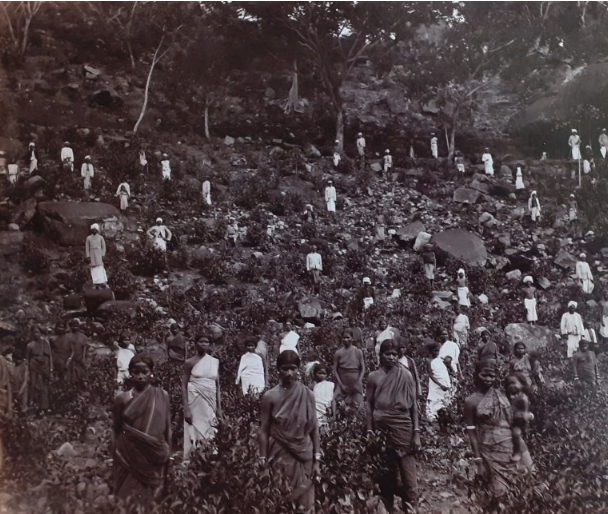
The struggle at Maviddapuram and larger anti-caste mobilisation was not only a political confrontation but also a moment that produced a generation of anti-caste activists, writers, and intellectuals who sought to document and challenge the inequalities within Tamil society. Among them was Dominic Jeeva, a Panchamar writer, editor, and Marxist activist who participated in the broader anti-caste movement. For Jeeva, the struggle against caste and untouchability was inseparable from the struggle over memory itself: whose suffering was recognised, whose histories were preserved, and whose voices were excluded. Reflecting decades later on the state’s burning of the Jaffna Public Library in 1981, he drew attention to a parallel act of destruction that received far less attention. While the burning of the library by Sinhala state forces became a defining symbol of Eelam Tamil collective trauma, particularly its Vellalar segment, Jeeva noted that around the same period, in Ezhuthumattuval, books and notebooks belonging to Eelam Tamil Panchamar schoolchildren were seized and burned by Vellalar caste extremists. His question was not whether one act of destruction mattered more than the other, but why Tamil society remembered one as an attack on its history while allowing the other to disappear from public memory. A similar dynamic is evident in the remembrance of the 1983 Black July pogrom. Commemorative narratives have largely centred the genocidal violence unleashed in Colombo, while often overlooking how Malayaga Tamils were also especially vulnerable to the same anti-Tamil violence. Across the plantation districts, workers and their families were burned alive, hacked to death, and displaced, yet these experiences remain peripheral in dominant memorial narratives. In both cases, memory is structured not only by the scale of violence but also by the social hierarchies that determine which Tamil lives, losses, and histories become emblematic of collective suffering.
This question extends beyond the events of 1981 and 1983. It concerns the ways in which Tamil history itself has been preserved and transmitted up until the present. In Tamil education, in public commemorations, and within historical writing, figures associated with Saivite revivalism such as casteist extremist Arumuga Navalar continue to occupy prominent positions. His image remains embedded in learning and cultural spaces, and his role in shaping Tamil religious identity under British colonial rule is often commemorated as part of an anti-colonial awakening, while the violent forms of caste exclusion and social violence associated with this legacy are frequently diminished. The irony is that colonial rule, despite presenting itself as a force that challenged extremist caste practices and social structures, also created conditions in which caste-based revivalist movements could later be reframed as expressions of anti-colonial resistance. What emerged as a defence of Tamil religious and cultural identity was subsequently incorporated into narratives of resistance against colonial domination, allowing the caste hierarchies within these movements to be obscured or separated from their violent historical legacy.
Reclaiming the Anti-Caste Foundations of Tamil Resistance
This selective preservation of memory has shaped not only how religious revivalism is remembered, but also which forms of Tamil resistance are recognised as central to the community’s history. While figures associated with the anti-state struggle have been widely commemorated, the anti-caste leaders, activists, and intellectuals who challenged caste oppression within Tamil society remain far less visible. Panchamar organisers who confronted untouchability, activists who led temple-entry campaigns, and writers such as Dominic Jeeva, who documented these struggles, have not received comparable recognition within wider Eelam Tamil society. Their marginalisation reflects a broader process of historical erasure, one that obscures the anti-caste movement's central place in Tamil political and social history. Yet the struggle against caste was not separate from the history of Tamil resistance; it constituted one of its earliest and most enduring movements for dignity, equality, and belonging.
One consequence of this historical erasure has been the fragmentation of Tamil political history, whereby struggles against Sinhala majoritarianism and caste oppression have been narrated as distinct and unrelated trajectories. The historiography of 1956 offers perhaps the clearest illustration of this divide. The year has typically been understood through two separate narratives: the enactment of the Sinhala Only Act and the mobilisation against Sinhala majoritarianism on the one hand, and the Temple Entry Movement as an “internal” question of social reform on the other. Such a framing obscures the merged realities of those who occupied multiple sites of marginalisation. For Panchamars, experiences of oppression could not be neatly divided into "external" and "internal" forms. They encountered discrimination from the state as Tamils while simultaneously facing exclusion within Tamil society on the basis of caste and further (gender, sexuality, disability, etc.). These were not parallel struggles but interconnected manifestations of power that shaped everyday life and political possibility. Restoring this intersectional perspective is therefore an act of historical repair. It does not diminish the importance of resistance to Sinhala majoritarianism; rather, it demonstrates that the struggle for Tamil liberation was inseparable from contestations over caste hierarchy, exclusion, and unequal belonging within Tamil society. Recognising these intertwined histories challenges the tendency to privilege ethnic/racial oppression while marginalising caste oppression. It instead reveals how liberation was, and remains, contingent upon confronting both simultaneously.
The question at the heart of this history is therefore not only what was lost, but whose losses are remembered. It asks not only how a people remembers oppression from outside, but how it remembers the inequalities within itself: whose histories are preserved, whose struggles are recognised, and whose experiences are allowed to fade from collective memory. The absence of one history alongside the prominence of another is not merely a failure of remembrance; it reveals the power to determine which stories become central to a community’s identity and which remain at its margins. The enduring question is not only whose history do we remember, but who is the “we” that claims to remember it?